
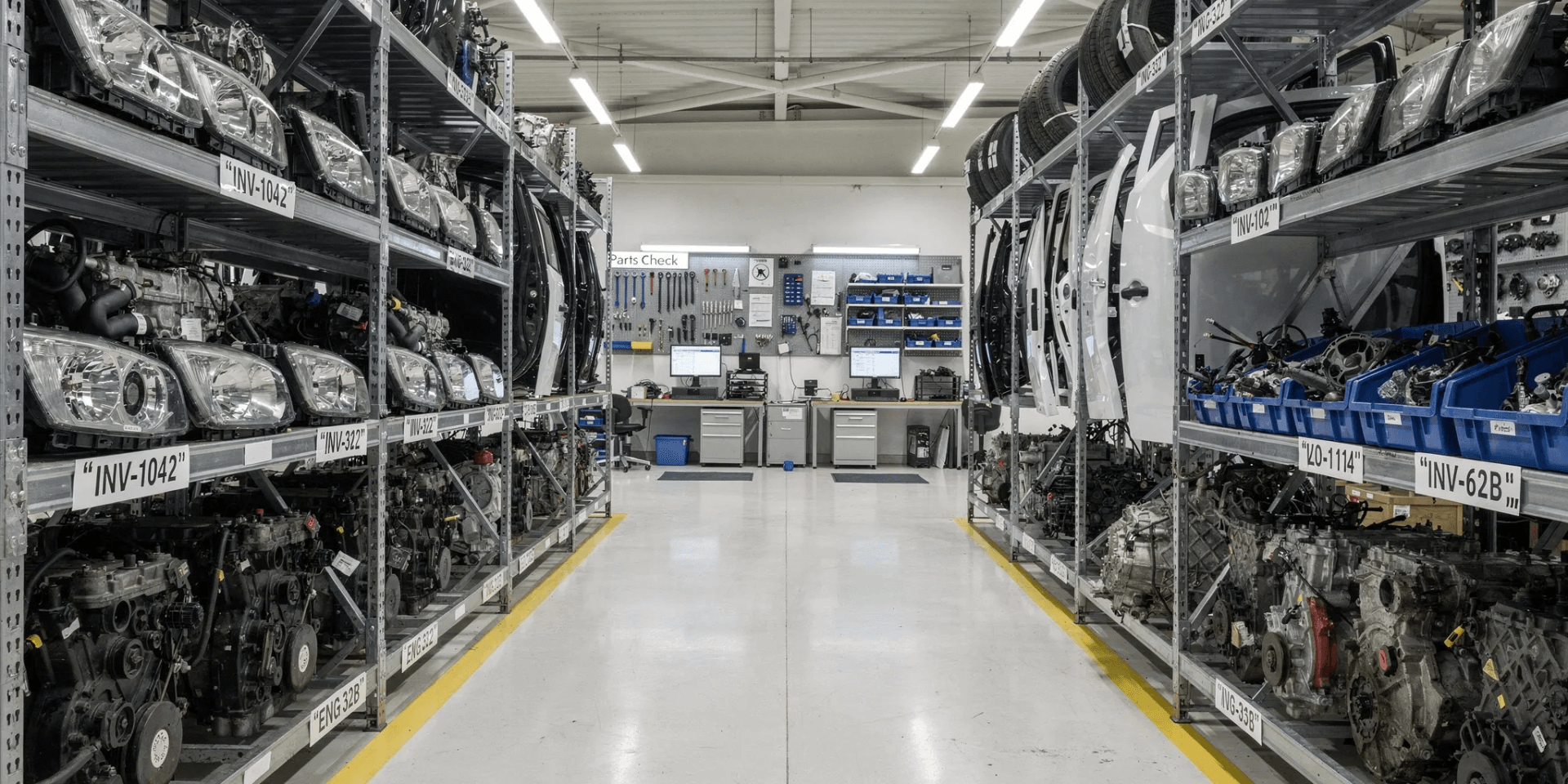
When you see a vehicle stripped for parts advertised, it means that a dismantling team removes usable components from the vehicle. The vehicle may have accident damage, mechanical problems or repair costs that exceed its value. Suppliers can then sell the usable components as replacement parts.
This process can help Hyundai and Kia owners find affordable parts. It may be useful when new components cost too much, take too long to arrive or are difficult to source.
This guide is for South African drivers, workshops, mechanics, panel beaters and fleet owners. It explains how stripped vehicle parts work and what buyers should check.
Empire Parts helps customers reduce uncertainty by checking vehicle details, part information and available sourcing options before confirming an order.
Quick Answer
When a business strips a vehicle for parts, its team removes usable components and sells them separately instead of repairing the entire vehicle. Available parts may include body panels, lights, mirrors, interior trim, engines, gearboxes and selected electrical components. Buyers should confirm the condition, compatibility and safety of each part.
Why Vehicles Are Stripped for Parts
A dismantling business may strip a vehicle when repairing the entire vehicle no longer makes financial sense. Accident damage, mechanical failure, an insurance decision or high repair costs can lead to this outcome.
The vehicle may still contain many usable components. For example, a damaged Hyundai or Kia could still have working lights, doors, mirrors, interior components, engine parts or gearbox parts.
Why would a damaged vehicle still have useful parts?
Not every component suffers damage during the same accident or mechanical failure. One area of the vehicle may have severe damage while other parts remain usable.
For example, a vehicle with rear accident damage may still have a usable front bumper, headlamps, mirrors or engine components. The supplier should inspect each part before selling it.
How the Vehicle Stripping Process Usually Works
A professional dismantling team should follow an organised process and keep clear records. The team examines the vehicle and carefully removes reusable components to avoid unnecessary damage.
They may record the vehicle details, identify useful parts, remove them in a planned order and inspect their condition. The team can then organise and store the parts for future enquiries.
What happens before parts are removed?
Before removing any parts, the dismantling team should record the vehicle details and identify potentially usable components. This information helps the supplier decide what customers may reuse safely.
Important details include the make, model, year, VIN, engine size, transmission type and visible accident damage. Suppliers can use these details during future fitment checks.
Which Hyundai and Kia Parts Are Commonly Reused?
Buyers often reuse Hyundai and Kia body panels, doors, bonnets, bumpers, grilles, mirrors, lights and interior trim. Other available components may include window regulators, alternators, starters, engines and gearboxes.
Which parts from stripped vehicles are commonly reused?
Buyers commonly reuse body panels, lights, mirrors, trim, engines, gearboxes, starters, alternators and selected interior components. However, they should still check the condition and compatibility of every part.
Mechanical and electrical components may require testing, videos or part number checks. Buyers should confirm these details before paying.
Testing and Condition Checks Matter
Testing helps buyers reduce the risks associated with parts from stripped vehicles. Buyers can inspect some components visually, while mechanical and electrical parts may require further testing.
Ask for compression information or a startup video when enquiring about an engine. Suppliers can test alternators and starters on a bench. Buyers should inspect lights for clear lenses, intact tabs and working motors. Electrical modules may also require compatibility checks.
Should parts from stripped vehicles be tested?
Yes. The supplier should test parts whenever practical and relevant. Testing can help confirm that a component works before the supplier sells it.
Each part requires a different assessment. Buyers can inspect a door or mirror visually. However, an engine, starter, alternator or electronic component may require more detailed testing.
What Buyers Should Check Before Paying
Before buying a part from a stripped vehicle, check fitment, condition, testing information, warranty terms, return rules and seller credibility. A low price should not be the only deciding factor.
Ask for the vehicle details, part number where possible, clear photos, condition notes and any available testing proof. Also confirm whether the part is suitable for your exact Hyundai or Kia model.
What should I ask before buying a stripped vehicle part?
Ask whether the part matches your VIN and what condition it is in. Confirm whether the supplier tested it, what warranty applies and whether you may return it. These questions reduce the risk of buying the wrong component.
Ask for close photographs of labels, plugs, brackets, mounting points and visible wear. These details can help with condition and fitment checks.
Be Careful With Safety-Related Parts
Buyers should not reuse every part without careful consideration. Components linked to airbags, seatbelts, braking, steering, suspension safety and crash sensors require extra caution.
These parts can affect how a vehicle responds during an emergency. Ask a qualified professional for advice if you cannot confirm the condition, history or compatibility.
Which stripped parts need extra caution?
Used airbags, crash sensors, seatbelts, braking parts, steering parts and suspension safety parts need extra caution. These parts can affect vehicle safety if they are damaged, incompatible or unreliable.
Used parts may suit body panels, mirrors, lights, trim and selected mechanical components because buyers can inspect their condition more easily.
Why Paperwork and Proof of Origin Matter
Paperwork protects both the buyer and seller. Keep a proper invoice, supplier details and clear information about the part. These records confirm the origin of the component and the terms agreed before payment.
For broader legal context, the South African Government provides information about the Second Hand Goods Act.
This is especially relevant when buying used parts, because buyers should avoid stolen, undocumented or suspiciously cheap parts.
What proof should I keep after buying used parts?
Keep the invoice, supplier details, warranty terms, part photos, part number and all WhatsApp or email messages. These records help confirm what was ordered and what was supplied.
They can also help if there is a fitment issue, warranty query or return request after the part is delivered.
How Stripped Vehicle Parts Can Save Time and Money
Parts from stripped vehicles can help reduce repair costs and shorten waiting times when suitable parts are available. This is useful for workshops, panel beaters, fleet owners and drivers who need practical replacement options.
Used parts may be especially helpful for body panels, lamps, mirrors, trim and selected older vehicle parts. They can also help when new parts are on back order.
Are stripped vehicle parts always cheaper?
Stripped vehicle parts are often cheaper than new parts, but the final value depends on condition, fitment, delivery time, warranty and total repair cost. The cheapest part is not always the best option.
A tested used part with clear condition notes and return terms may be better value than an unknown part with no support.
How Empire Parts Helps With Stripped Vehicle Parts
Empire Parts helps customers find suitable Hyundai and Kia components from available stock. The team can check VIN details, part numbers and available sourcing options. Customers can also ask about condition, delivery and warranty information where available.
Send Empire Parts your vehicle details, requested part and photographs. The team can then check available options before confirming your order.
To send your vehicle details directly, visit the Empire Parts Request a Part page.
What Is the Best Next Step?
A dismantled vehicle can still provide useful replacement parts when a professional team removes, inspects and matches the components correctly.
Before buying, confirm fitment, inspect condition, ask about testing, check warranty terms and keep proper records. Avoid guessing, especially with safety-related parts or electronics.
Need help finding a Hyundai or Kia part from available stock? Contact Empire Parts with your VIN, part details and photos so the team can help check suitable options.
Need help finding Hyundai or Kia parts from available stock?
Send Empire Parts your VIN, part details and photos so the team can help check suitable options.
Frequently Asked Questions
Why are vehicles stripped instead of repaired?
Vehicles are often stripped instead of repaired when the full vehicle is damaged, not running or too costly to fix. Usable parts may still be removed and sold separately. Empire Parts helps customers check available Hyundai and Kia parts where stock allows.
How does organised stripping help protect vehicle parts?
Organised stripping helps protect vehicle parts because components are removed carefully instead of being pulled out roughly or damaged during removal. This can help keep brackets, plugs, clips and mounting points in better condition before the part is checked and stored.
Should safety parts from stripped vehicles be checked carefully?
Yes, safety parts from stripped vehicles need careful checking because airbags, crash sensors, seatbelts, braking parts and steering parts can affect vehicle safety. If the condition, history or compatibility is unclear, buyers should get professional advice before choosing a used option.
Why is stock availability important with stripped vehicle parts?
Stock availability matters because parts from stripped vehicles can sell quickly and may not be available again from the same vehicle. Customers should confirm the part, condition, fitment and price before assuming it is still available for their Hyundai or Kia.